
About open water swimming
Open water swimming is swimming in natural bodies of water like lakes, rivers, and oceans, rather than in a pool. It differs from pool swimming by offering a more unpredictable environment with natural elements like currents, waves, and wildlife to contend with.
The “Oceans Seven” challenge
The Challenge:
The Oceans Seven was devised in 2008 as a swimming equivalent to the Seven Summits mountaineering challenge, where climbers aim to reach the highest peak on each continent.
The Swims:
The seven swims are:
North Channel (between Ireland and Scotland)
English Channel (between England and France)
Catalina Channel (between Catalina Island and the California mainland)
Cook Strait (between the North and South Islands of New Zealand)
Molokai Channel (between Molokai and Oahu in Hawaii)
Tsugaru Strait (between Honshu and Hokkaido, Japan)
Strait of Gibraltar (between Spain and Morocco)
Conditions:
These swims are notorious for challenging conditions like strong tidal currents, cold water, and the presence of various marine life.
Significance:
The Oceans Seven is considered one of the most demanding achievements in open water swimming, and only a small number of swimmers have successfully completed it.
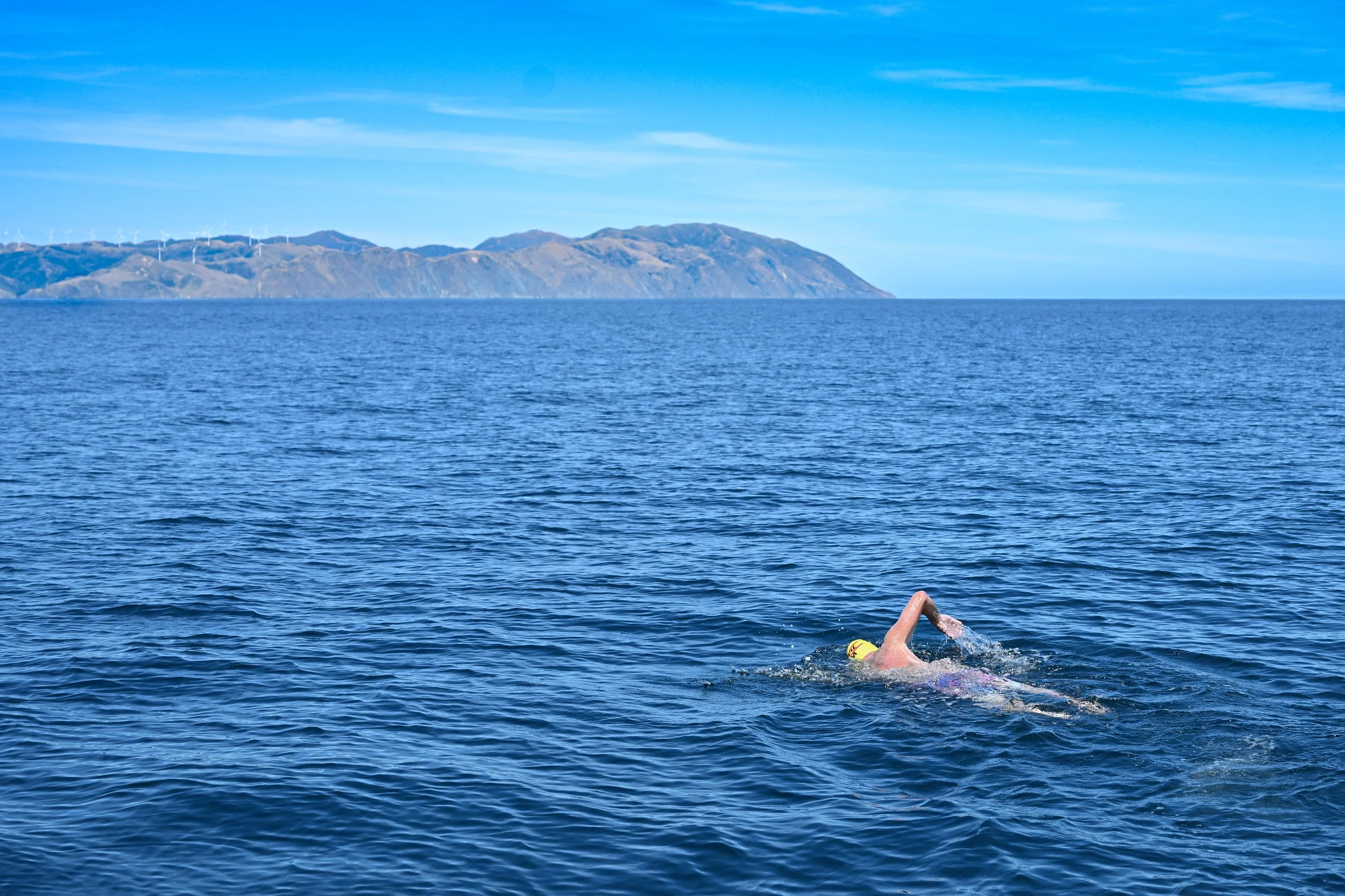
The Cook Strait
The Cook Strait or Te Moana -o-Raukawa in Maori, is the body of water that separates the lower north island and upper south island. The water connects the Taman sea and the South Pacific Ocean. Approximately 14 miles wide, it provides a unique challenge for swimmers with its quickly changing conditions and localised currents.
Contact us
Interested in working together? Fill out some info and we will be in touch shortly. We can’t wait to hear from you!